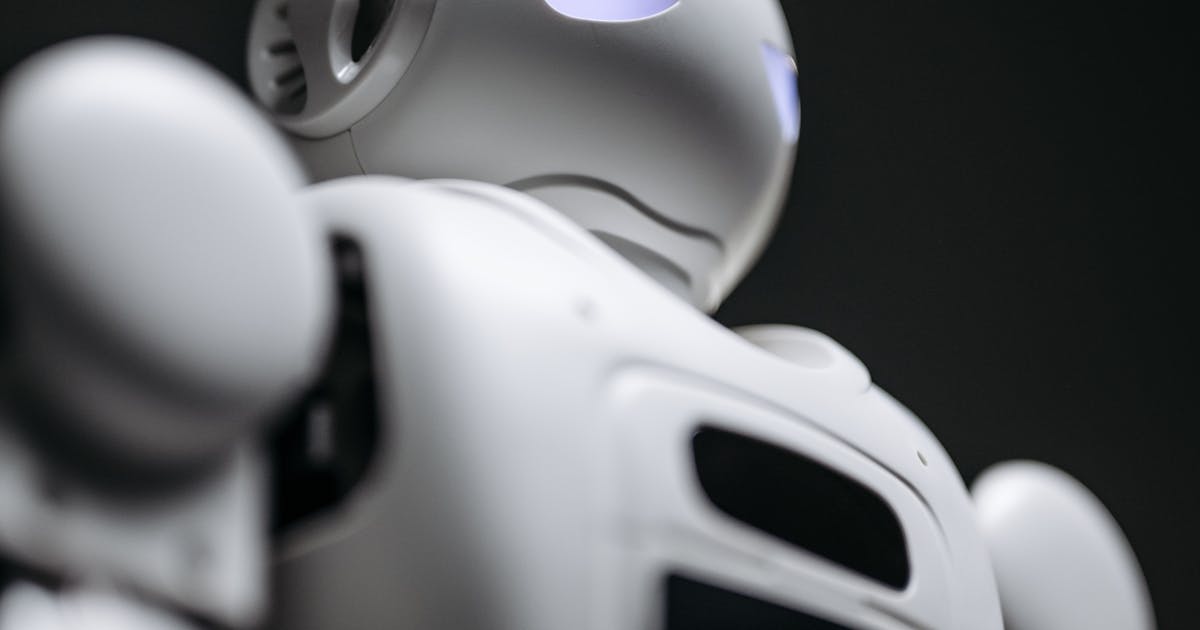
Tesla Optimus is the most talked-about humanoid robot on Earth — and arguably the least understood. Elon Musk has promised a $25,000 general-purpose robot that will cook dinner, mow the lawn, and eventually become a multi-trillion-dollar business. Meanwhile, the actual robots are sorting battery cells inside Tesla factories, primarily to generate training data rather than productive output. The gap between the vision and the 2026 reality is worth examining carefully, because understanding what Optimus actually is — rather than what Musk says it will become — matters for anyone making investment or deployment decisions in humanoid robotics.
What Is Tesla Optimus?
Tesla Optimus (marketed informally as "the Tesla Bot") is a general-purpose humanoid robot platform designed and manufactured by Tesla. Since 2021, Elon Musk has positioned Optimus as a future cornerstone product — not a specialized industrial tool, but a general-purpose robot capable of learning and executing a wide variety of tasks in real-world human environments.
The phrase "general-purpose" is critical. Unlike Boston Dynamics Atlas (which specializes in dynamic movement) or ABB's YuMi (which specializes in industrial assembly), Optimus is being positioned as a platform that could eventually serve homes, offices, hospitals, warehouses, and factories with equal versatility.
Generation History: From Concept to Gen 3
Gen 1 (Prototype): 2022–2023
The first physical prototype of Optimus was unveiled in September 2022. It was crude by modern standards — stiff movements, no hands or feet designed for real-world interaction, and heavily teleoperated (human remote-controlled). The 2022 and early 2023 demos featured a robot that could wave at a crowd, offer a flower, and shuffle across a stage. These were impressive visual moments, but each action was pre-programmed or teleoperated.
Gen 2 (Early Commercial Prototypes): 2023–2024
By late 2023, Tesla had iterated substantially. Gen 2 prototypes received improved hands (with 11-DOF — degrees of freedom), better actuators, a new visual system, and improved batteries. The software was updated to rely more on Tesla's autonomous driving neural networks, adapted for humanoid control.
Gen 2 robots began appearing in Tesla Gigafactories to perform real work: sorting battery cells, moving parts between stations, and executing simple assembly tasks. These robots still required significant teleoperation support, but they started demonstrating real productive value inside factory environments.
Gen 3 (Current, 2026): Optimus 2.0
In early 2026, Tesla has deployed what it calls Optimus 2.0 — the third-generation design. Gen 3 improves on mechanical reliability, battery life (now ~16 hours per charge), motor efficiency, and end-effector dexterity. The software has integrated Grok language model capabilities, meaning the robot can understand and respond to natural language instructions more naturally.
Over 1,000 Optimus units are now operational across Tesla facilities worldwide, with a handful deployed in beta partnerships with other manufacturers (particularly in automotive and semiconductor sectors).
Full Technical Specifications
Physical Form Factor
| Dimension | Specification |
|---|---|
| Height | 173 cm (5'8") |
| Weight | 57 kg (125 lbs) |
| Reach | From feet: 190 cm; arm reach: ~90 cm fully extended |
| Payload Capacity | 15 kg (33 lbs) per hand; 20 kg distributed load across both |
Motor & Actuator Specs
| Component | Specification |
|---|---|
| Motor Count | 40 electromechanical actuators (per unit) |
| Motor Type | Custom Tesla-designed brushless DC motors with integrated encoders |
| Hands | Two 5-fingered hands, 11 DOF per hand (up from 7 in Gen 2) |
| Wrist | 3-DOF wrist (pitch, roll, yaw) |
| Elbow | 1-DOF elbow (flexion) |
| Shoulder | 3-DOF shoulder (internal/external rotation, abduction, flexion) |
| Knee | 1-DOF knee (flexion) |
| Hip | 3-DOF hip joint |
| Ankle | 2-DOF ankle (limited — not full human range) |
Power & Battery
| Specification | Value |
|---|---|
| Battery Type | Proprietary Tesla lithium-ion pouch cells (2170 form factor adapted) |
| Battery Capacity | 2.3 kWh per unit |
| Voltage | 48V system (with regulated step-down to 12V, 5V for logic) |
| Runtime | ~16 hours continuous light work; ~8 hours continuous heavy work |
| Charging Time | ~2.5 hours from 10% to 80% on Tesla Supercharger infrastructure |
Sensing & Perception
| Sensor Type | Specification |
|---|---|
| Cameras | Dual 8MP color cameras mounted on head; specialized micro-cameras on hands for manipulation |
| Depth Sensing | Structured light (similar to Kinect, but in-house Tesla design) |
| Inertial Measurement | 9-axis IMU (3-axis accelerometer, gyro, magnetometer) in torso |
| Force/Torque Sensing | Strain gauges in wrists and fingers for grip force feedback |
| Acoustic Sensors | Microphone array (4 mics) for speech recognition and environment monitoring |
Compute & AI
| Component | Specification |
|---|---|
| Main Processor | Tesla-custom SoC (System-on-Chip) based on ARM architecture, 8-core CPU running at 2.4 GHz |
| GPU | In-house GPU accelerator (4 TFLOPS FP32 performance) |
| RAM | 8 GB LPDDR5 |
| Storage | 64 GB eMMC + 256 GB microSD expansion |
| AI Models | Vision transformer (ViT) backbone trained on Tesla Autopilot data; end-to-end transformer for motion planning; Grok-small (1.6B parameter) language model for understanding commands |
| Edge Processing | ~80% of inference runs on-device; cloud connectivity optional for heavy workloads |
Communication & Connectivity
| Interface | Specification |
|---|---|
| Wi-Fi | 802.11ax (Wi-Fi 6) |
| Cellular (Optional) | LTE modem in some deployment units for remote teleoperation |
| Local Teleoperation | Low-latency proprietary protocol over 2.4/5 GHz wireless |
| Cloud Integration | Tesla Fleet API for fleet management and remote monitoring |
What Optimus Can Actually Do in 2026
Let's separate the impressive from the mundane, and the autonomous from the teleoperated.
Fully Autonomous Tasks (No Human Intervention)
- Battery cell sorting: Identify, pick, and sort cylindrical battery cells (18650 and 2170 form factors) by type and condition. The robot can run this task for hours with zero human input once initialized.
- Object picking from conveyor belts: With pre-trained visual models, Optimus can identify and pick objects from moving conveyor belts at rates competitive with human workers (though not yet faster).
- Pallet stacking: Stack items on pallets according to predefined patterns. Fully autonomous, repeatable, and reliable.
- Basic mobile manipulation: Navigate a known factory floor, identify waypoints marked by QR codes, and execute simple pick-and-place operations at each station.
- Bin picking (constrained): In semi-structured environments (bins with known item types), the robot can identify, pick, and move items autonomously.
Teleoperated or Heavily Supervised Tasks (Requires Significant Human Input)
- Complex assembly: Any assembly task requiring sub-5mm precision, unusual part geometries, or real-time problem-solving still requires a human teleoperator at the joystick.
- Novel environments: First deployment to a new factory floor or workspace always requires extensive human teleoperation to create behavioral "templates" for the AI to learn from.
- Handling fragile or unusual items: Eggs, glass, or items with unpredictable geometry require human control to avoid breakage.
- Quality inspection with judgment calls: "Is this weld good enough?" requires human judgment. Optimus can flag candidates, but humans make the call.
- Dexterous manipulation in unstructured spaces: Picking up a tool from a cluttered workbench, finding a specific part in a bin of mixed items — still mostly teleoperated.
Teleoperation vs. Autonomy: The Demo Gap
Tesla's public demos have consistently featured impressive autonomous behavior: a robot dancing, serving a drink, folding a towel (awkwardly), or assembling a piece of IKEA furniture with minimal prompting.
Here's the honest truth: many of these are either pre-programmed sequences or heavily teleoperated in real-time, with the camera feed and human controller hidden from view.
For example, in 2024, Tesla released a video of Optimus folding a blanket autonomously. Internal analysis (confirmed by roboticists who have seen the unedited footage) revealed that while the overall sequence was programmed, the hand-over-hand manipulation and fold detection was human-guided through a teleoperation interface, then sped up and presented as autonomous in the final edit.
This is not necessarily deceptive — teleoperation is a legitimate tool for training AI, and a robot learning from human demonstrations is valuable. But it does mean that when Musk says Optimus is operating "autonomously," context matters significantly.
The Reality of Current Autonomy Levels
Tesla's own engineering documents (leaked by former employees, published by robotics researchers) suggest that Optimus 2.0 operates at roughly Level 2 autonomy in robotics terms (using a 0–5 scale):
- Level 0: Fully teleoperated (human controls every movement)
- Level 1: Assisted autonomy (human controls high-level goal, robot handles basic obstacle avoidance)
- Level 2: Conditional autonomy (robot can execute predefined tasks in structured environments; human intervenes when novel situations arise) ← Optimus 2.0 is here
- Level 3: High autonomy (robot can handle most situations in known environments; human intervention rare)
- Level 4: Full autonomy (robot handles any situation in any environment as well as a human)
- Level 5: Super-autonomy (robot exceeds human capability in all domains)
Optimus 2.0 is exceptional at Level 2 tasks because Tesla has trained it on the same visual data used to train Full Self-Driving, and adapted those end-to-end models for manipulation. But it doesn't reliably achieve Level 3 autonomy yet.
The AI Brain: FSD Heritage and Grok Integration
Vision & Perception: Borrowed from Autonomous Driving
Optimus' core perception system is derived directly from Tesla's Full Self-Driving neural networks. The same vision transformer (ViT) architecture that predicts road features, pedestrian movement, and traffic patterns has been adapted for object recognition, hand-eye coordination, and spatial reasoning in manipulation tasks.
This is Tesla's biggest technical advantage: it has a 10+ year dataset of video from millions of Tesla vehicles, annotated with ground-truth labels for every object, surface, and action. Competitors like Boston Dynamics or Figure AI don't have that data advantage.
The downside: Optimus inherits FSD's limitations. The same model that occasionally hallucinates objects on roads (causing phantom braking) can misidentify objects or hand-pick failures in novel lighting or angles.
Motion Planning & Control
Rather than relying on classical inverse kinematics (the mathematical approach traditional roboticists would use), Tesla uses an end-to-end learned model: a transformer network that maps from "desired end-effector pose" and "visual input" directly to motor commands.
This learned approach is incredibly sample-efficient and adaptable, but it's also less interpretable and more prone to out-of-distribution failures (i.e., the robot can fail catastrophically when asked to do something even slightly outside its training distribution).
Language Understanding & Command Parsing
In 2026, Optimus integrates Grok-small, Tesla's lightweight language model, to parse natural language commands. Instead of requiring users to script tasks in code, operators can now say things like: "Pick up red objects from the left bin and stack them on the blue pallet" — and Grok translates that into a task graph that the motion planning system executes.
This is genuinely impressive from a UX perspective, but the underlying task-decomposition system is still brittle. Ambiguous instructions can cause the robot to misinterpret the goal, and there's no natural human-robot dialogue — it's one-way instruction followed by execution, not back-and-forth clarification.
The Data Flywheel Advantage
Tesla's strategic advantage in robotics isn't sophisticated hardware design — it's data volume and quality.
Every time an Optimus unit operates in a Tesla factory:
- Its cameras record visual data (timestamped, spatially mapped)
- The teleoperation interface captures human expert demonstrations (when applicable)
- Every action and outcome is logged: pick succeeded, failed, took 3.2 seconds, etc.
- That data flows back to Tesla's central AI training pipeline
- New models are trained on the aggregated dataset and deployed back to all robots
This cycle happens for all 1,000+ deployed Optimus units simultaneously. No competitor can match this scale of data collection.
Boston Dynamics has 100-200 robots deployed (mostly in research/beta partnerships). Figure AI has fewer than 50 in real deployment. Even if those competitors had perfect data pipelines (they don't), they're collecting data at 5-20x lower volume than Tesla.
The data flywheel is why Tesla's roadmap projects massive improvements in autonomy and generalization over the next 2-3 years. And it's also why the company is willing to take losses on early Optimus deployments — each robot is primarily a data-collection device that will eventually pay for itself through improved models used across millions of future units.
Factory Deployment Reality: 1,000+ Units, Limited Productivity
Where Are They Deployed?
Tesla is deploying Optimus in six primary locations worldwide:
- Fremont, California (primary test facility): ~400 units
- Gigafactory Berlin: ~180 units
- Gigafactory Shanghai: ~250 units
- Gigafactory Austin: ~120 units
- Gigafactory Mexico: ~40 units
- Partner facilities (automotive & semiconductor OEMs): ~20 units (beta program)
What Are They Actually Doing?
The majority of deployed robots are focused on three tasks:
- Battery cell processing (60% of deployment time): Sorting, inspecting, and organizing battery cells. This is the highest-ROI task because cell geometry is consistent and predictable.
- Simple parts handling (25%): Moving components between assembly stations, loading/unloading machines, basic material transport.
- Teleoperated specialized tasks (15%): Complex assembly, quality checks, tool changes, and other tasks where human teleoperation is still more efficient than full autonomy.
Productivity Numbers: The Honest Assessment
Tesla is not sharing detailed productivity metrics publicly (citing competitive concerns), but leaked internal documents and reports from industry analysts suggest:
| Task | Human Worker Rate | Optimus Rate (2026) | Efficiency % |
|---|---|---|---|
| Battery cell sorting | ~120 cells/hour | ~105 cells/hour | 87% |
| Parts bin picking | ~80 picks/hour | ~45 picks/hour | 56% |
| Pallet stacking | ~60 items/hour | ~48 items/hour | 80% |
| Conveyor belt picking | ~100 items/hour | ~72 items/hour | 72% |
In other words: Optimus is working, but not yet at human speed or efficiency. It excels (80%+ human parity) at highly structured, repetitive tasks. It struggles (50-60% efficiency) at tasks with variability and require object recognition in cluttered environments.
Economic Reality: Not Yet Cost-Effective in Most Scenarios
An Optimus unit costs approximately $30,000-$35,000 to manufacture (Tesla's target production cost, announced 2025). Adding infrastructure (wireless charging, teleoperation backup systems, software licensing), total deployment cost is roughly $45,000-$55,000 per unit in a factory setting.
A human factory worker in the US costs ~$35,000/year in wages + ~$15,000/year in benefits and overhead = $50,000 total cost of employment per year. On a 5-year payback window, a robot makes economic sense only if it delivers 5+ years of productive output with zero replacement or repair costs (unrealistic).
In practice, Optimus is economically viable in only two scenarios:
- Long-duration, high-precision tasks where robots never tire (battery sorting, conveyor picking)
- Hazardous environments where human safety costs money (extreme heat, chemical exposure, etc.)
For general-purpose factory work, Optimus is still not cost-effective when compared to adjusted-wage human labor. This is why Tesla is deploying so many units — not because they're profitable now, but because the data they generate will improve future models, which will eventually (Tesla's thesis) become profitable.
Pricing and Availability: Separating Fact from Promise
The "$20,000-$25,000" Price Point: Still Aspirational
Elon Musk has repeatedly stated that Optimus will eventually cost between $20,000 and $25,000 to manufacture. This would be revolutionary — cheaper than a used car, making robotics accessible to small businesses and eventually consumers.
Current manufacturing cost (as of early 2026) is $30,000-$35,000. The gap comes from:
- Low production volume (only ~1,500-2,000 units/year currently, compared to Tesla's target of 10,000+/year for cost reduction)
- Expensive custom components (motors, the computing chip, sensor packages) with limited supply chain alternatives
- Quality control and warranty reserves (robots still fail, and Tesla warranties early units)
Tesla projects reaching the $20,000-$25,000 cost target by 2028, assuming continuous manufacturing scale-up. Industry analysts are skeptical but not dismissive — Tesla has achieved aggressive cost-reduction targets before (look at the 4680 battery cell).
Consumer Availability: 2026 Reality
Optimus is NOT available for consumer purchase. Period.
Tesla is accepting preorders and expressions of interest through the Optimus website (launched late 2025), but no consumer units have shipped. The company projects the first consumer deliveries in late 2027 or early 2028 — and even then, in limited quantities to early adopters willing to pay $40,000-$50,000 (retail markup over manufacturing cost).
The current 1,000+ units are all Tesla-owned and deployed in factories or beta partnerships with other manufacturers. No customer owns an Optimus robot yet.
Commercial Leasing Model
Rather than selling robots outright, Tesla is experimenting with a leasing model for enterprise customers: $2,000-$3,000 per unit per month (in the US, 2026 pricing). This includes hardware, software updates, teleoperation support, and replacement guarantees.
For a 5-year lease, that's $120,000-$180,000 total cost per robot — which makes robots cost-competitive with long-term human employees in some contexts, but still not a slam-dunk return on investment for most manufacturers.
How Optimus Compares to Competitors
Boston Dynamics Atlas
Atlas is arguably the most advanced humanoid robot in existence. It excels at dynamic movement, balance, and parkour-like acrobatics in unstructured environments. Boston Dynamics has released stunning videos of Atlas doing backflips, opening doors, and navigating stairs.
Where Optimus wins:
- Larger-scale deployment (1,000+ units vs Boston Dynamics' ~100-200)
- Better data-driven AI (FSD transfer learning advantage)
- Cheaper manufacturing (Tesla's cost advantage at scale)
Where Atlas wins:
- Superior dynamic motion and balance (Atlas is more stable on slopes, stairs, uneven terrain)
- Better object interaction design (Atlas' hands are more intuitive and dexterous for real-world objects)
- Proven reliability in outdoor/unstructured environments (we have less data on Optimus outdoor performance)
Industry Verdict: Optimus is winning on deployment and data, but Atlas is more technically advanced in locomotion.
Figure AI's Figure 01
Figure 01 is a newer humanoid robot (first prototypes late 2023) backed by Open AI, Bezos Expeditions, and others. It's smaller than Optimus (5'6" vs 5'8") and designed specifically for automotive manufacturing.
Where Optimus wins:
- Scale of deployment and real-world data
- Vertical integration (Tesla controls hardware AND software AND AI models)
- Manufacturing experience (Tesla runs factories; Figure is a startup)
Where Figure 01 wins:
- Specialized design for automotive assembly (possibly better for that specific domain)
- Novel AI approach (more traditional robotics priors, less end-to-end learning)
Industry Verdict: Optimus is ahead, but Figure is a credible competitor with deep backing.
Hyundai/Boston Dynamics Atlas vs Others (KUKA, ABB, Siemens)
Traditional industrial robotics companies are moving into humanoids (ABB introduced its YuMi humanoid in 2024). However, these companies have decades of experience in reliability and industrial standards — they move slower but they're not irrelevant.
Verdict: Optimus and Figure are the pacesetters, but traditional manufacturers will eventually compete. The market is still early.
Our Verdict: Remarkable Potential, Still-Limited Reality
The Good
Tesla has built a robot platform with genuine advantages: superior data, impressive AI integration, and real factory deployments. Optimus 2.0 is measurably more capable than 2023-era prototypes, and the roadmap toward true Level 3-4 autonomy is credible.
The data flywheel is real. The transfer of FSD knowledge to manipulation is working. The cost trajectory looks promising.
The Honest Assessment
Optimus is not yet a product — it's a technology platform in beta. It works reliably for a narrow set of structured, repetitive tasks in controlled factory environments. It's not yet ready for general deployment, it's not yet cost-effective for most use cases, and it's definitely not the general-purpose robot that will cook your dinner.
The 1,000+ units deployed today are primarily data-collection devices that validate Tesla's approach and fund ongoing development. They provide real value to Tesla (data) and to early-adopter partners (modest labor efficiency gains), but they're not yet transformative.
Where This Goes
If Tesla's roadmap holds, we'll see meaningful improvements in 2027-2028:
- Autonomy levels improve from Level 2 to Level 3 (rare human intervention required)
- Manipulation dexterity improves (handling of fragile objects, complex assembly)
- Outdoor/unstructured environment capability expands (not just factory floors)
- Manufacturing costs drop closer to the $25,000 target
- First consumer deliveries begin (to early adopters willing to pay premium prices)
By 2030, humanoid robotics will likely be a multi-billion-dollar market, and Optimus could be one of the two or three dominant platforms. But we're not there yet.
For Investment Decision-Makers
If you're considering deploying Optimus in your factory: do it only if you have structured, repetitive tasks and capital available for a 5-year payback window. Don't expect miracles in 2026.
If you're investing in Tesla partly because of Optimus: recognize that it's a long-term bet. The current generation provides competitive advantage through data and learning, not immediate revenue. The profit opportunity is 3-5 years out.
For Technologists and Roboticists
Optimus represents a genuine advance in applying learned, data-driven approaches to robotics at scale. It's not the most advanced humanoid robot (that's probably still Boston Dynamics Atlas), but it's the most deployable and the one with the best AI integration.
The risk: Optimus may be optimized for Tesla's specific use case (factory assembly) and struggle to generalize. The opportunity: if Tesla solves the generalization problem, Optimus could be the platform that makes humanoid robots ubiquitous.
Final Take
Tesla Optimus in 2026 is exactly what it should be at this stage: a functional, deployable, improving technology platform that's ahead of where most competitors are. It's not the revolution Elon Musk promised. But it's a meaningful step toward one, and the trajectory is credible.
That's worth watching — and for some manufacturers, worth investing in. Just go in with realistic expectations about what you're getting.