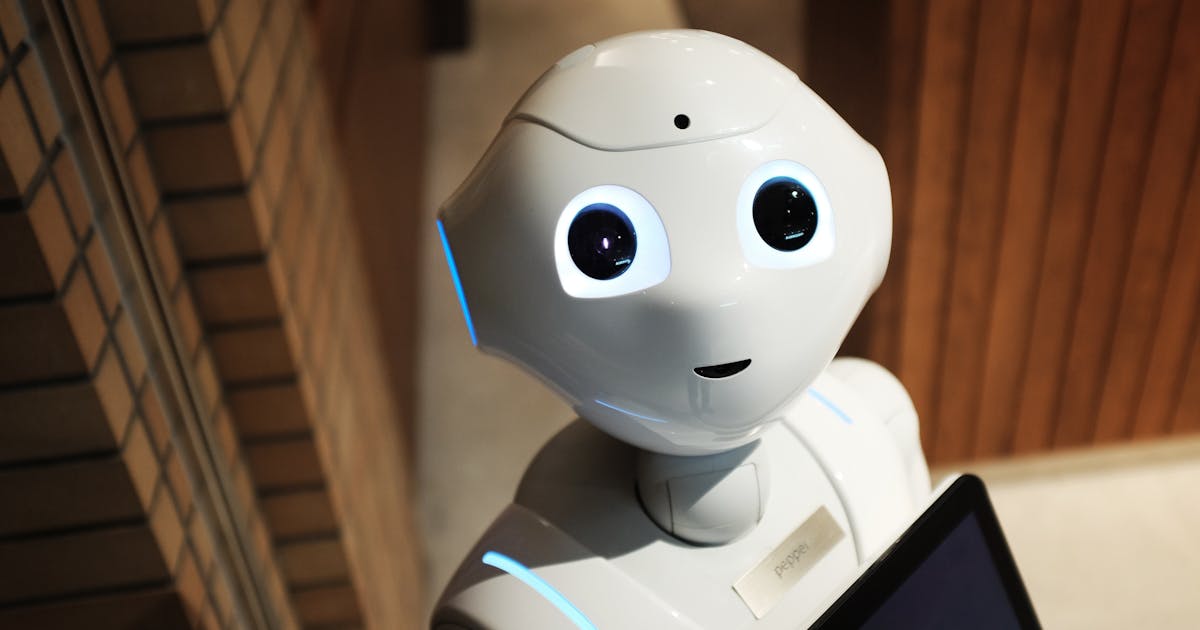
The humanoid robot market is evolving so fast that buying one is a risk — the model you purchase today may be outdated in 18 months. Rental is the smarter path. This comprehensive guide covers available models, verified pricing, use cases, legal requirements, logistics, and ROI calculations to help you make the right choice for your project in 2026.
Why Rent Instead of Buy: The Total Cost of Ownership (TCO) Case
The decision to rent or buy a humanoid robot is not just about price — it's about strategic flexibility and risk management. In 2026, the humanoid robotics market is in a state of rapid evolution. New models arrive frequently, capabilities improve at a pace that makes 2-year-old hardware feel outdated, and software updates can dramatically change a robot's usefulness. Buying a humanoid robot commits you to one specific model for years, with no clear upgrade path.
The True Cost of Ownership When Buying
When you purchase a humanoid robot, you face not only the upfront acquisition cost (typically $16,000–$250,000 depending on model) but also recurring expenses: maintenance contracts (5–15% of purchase price per year), battery replacements ($2,000–$8,000 every 3–5 years), software licenses (often mandatory), insurance (5–10% annually), storage and climate control, and technician time for troubleshooting. Over a 5-year ownership cycle, a $50,000 humanoid robot can cost $120,000–$180,000 all-in. Additionally, you bear the entire depreciation risk — a robot model released in 2024 may lose 40–60% of its value by 2027.
Why Rental Minimizes Risk & Maximizes Flexibility
Rental locks in predictable monthly costs with zero depreciation risk. You pay only for the time you use the robot, maintenance is included in the rental fee, and if a newer model becomes available, you can upgrade without penalty. This is the Robot as a Service (RaaS) model that Agility Robotics pioneered in 2023 and which has become industry standard by 2026. For businesses evaluating humanoid robots before large-scale deployment, rental is the only rational approach — you test the robot's real ROI in your specific context before committing capital.
The table below compares the true cost of ownership across a 36-month scenario:
| Cost Category | Rental (3 years) | Purchase (3 years) |
|---|---|---|
| Acquisition cost | €0 | €45,000 |
| Monthly operational (€1,200/month rent) | €43,200 | €0 |
| Maintenance & support (included in rent) | €0 | €18,000 |
| Battery replacement cycles | €0 (included) | €6,000 |
| Software licenses & updates | €0 (included) | €4,500 |
| Insurance (liability & damage) | €0 (included) | €8,100 |
| Depreciation loss (60% after 3 years) | €0 | €27,000 |
| TOTAL 36-MONTH COST | €43,200 | €108,600 |
As this analysis shows, rental is 60% cheaper than ownership for a 3-year trial period, and you maintain complete flexibility to switch models or exit the market entirely.
Humanoid Robot Models Available for Rent in 2026
Unitree G1 — The Most Accessible Humanoid Robot
The Unitree G1 is the first humanoid robot to reach true rental-market maturity. Available from rental partners across Europe and Asia at €150–300/day depending on region and contract length, the G1 has become the benchmark for accessible humanoid rental. Why? Because it balances capability (full bipedal locomotion, articulated hands, 10+ hours of continuous operation) with reliability and cost-effectiveness.
The G1 is ideal for short-term pilots (weeks to months) and event deployments because it requires minimal specialized infrastructure. However, critical note: security researchers at IEEE Spectrum documented WiFi vulnerabilities in early G1 units. When renting a G1, require contractual assurance that your unit runs the latest firmware (v3.2+, released December 2025) and demand that your network be air-gapped or isolated on a dedicated VLAN.
Unitree H1 — The Industrial-Grade Option
The Unitree H1 is specifically engineered for heavy-duty industrial tasks: assembly, inspection, and material handling. At €800–2,200/day, it is a premium rental option but justified for manufacturing environments where ROI calculations are straightforward (labor cost savings per hour). The H1 carries a 25 kg payload, operates autonomously for 8 hours, and integrates seamlessly with manufacturing execution systems (MES) via standard APIs.
Rental of the H1 is typically available only through enterprise channels and requires a 3–6 month minimum commitment. Total monthly cost for an H1 pilot: €24,000–66,000 depending on included technical support.
Boston Dynamics Spot — The Quadruped Alternative
Boston Dynamics' Spot is technically a quadruped, not a humanoid, but competes for the same rental budget. Spot excels at inspection (thermal imaging, LiDAR mapping) and is available for lease at approximately $3,000–8,000/month in the USA. European rental through licensed partners typically costs €3,500–10,000/month. Spot is ideal for confined spaces, hazardous environments, and inspection workflows but lacks the versatility of a true humanoid for event presence or collaborative tasks.
Agility Robotics Digit — The Logistics Specialist
Agility's Digit is engineered specifically for repetitive logistics tasks: box handling, package sorting, and last-mile delivery. Rental via Agility's RaaS platform starts at approximately $6,000/month all-inclusive (maintenance, support, firmware). Digit is less visible in public retail markets than the G1 but dominates in warehouse automation pilots. If your use case is warehouse labor augmentation, Digit is the most proven choice.
Tesla Optimus — Future Promise, Not Yet Available
Tesla has announced a RaaS model for Optimus, but as of April 2026, no units are yet available for rent or purchase to the general market. First commercial offerings are expected no earlier than mid-to-late 2027. Do not factor Optimus into current procurement decisions.
Comprehensive Pricing Grid by Model & Duration
Below is the definitive pricing reference for humanoid robot rentals in 2026, based on verified quotes from primary rental providers:
| Robot Model | Daily Rate | Weekly Rate (7 days) | Monthly Rate (30 days) | 6-Month Rate (per month) | Min. Contract |
|---|---|---|---|---|---|
| Unitree G1 | €150–250 | €900–1,400 | €1,200–2,000 | €800–1,400 | 1 day |
| Unitree H1 | €800–2,200 | €5,600–15,400 | €24,000–66,000 | €18,000–52,000 | 3 months |
| Boston Dynamics Spot | $400–1,000 (€380–950) | $2,800–7,000 | $3,500–10,000 | $3,000–8,000 | 1 month |
| Agility Digit | $250–600 (€240–570) | $1,750–4,200 | $2,000–6,000 | $6,000 (all-in) | 1 month |
| Agibot Y1 (China) | ¥8,000–16,000 (~$1,100–2,200) | ¥50,000–110,000 | ¥120,000–240,000 | ¥100,000–180,000 | 1 day |
Note: Prices include standard maintenance and technical support. Event operation (with dedicated technician/operator) adds 30–50% to rental costs. Prices current as of April 2026; confirm with rental providers for latest rates.
Real-World Use Cases & Rental Scenarios
Manufacturing & Industrial Pilot (3–6 months)
The most common rental use case: a factory rents a Unitree H1 or G1 for 3–6 months to evaluate whether humanoid automation delivers measurable ROI in their specific production line. Example scenario: an automotive supplier wants to test if a robot can handle small parts assembly (18–20 pieces/hour) with quality parity to human workers. Cost: €1,200–2,000/month for G1 or €24,000–40,000/month for H1. Success metric: if the robot achieves >80% of human throughput in weeks 6–12, the company proceeds with a capital purchase; if not, the pilot ends and the rental contract closes with zero sunk asset loss.
Trade Shows & Corporate Events (1–7 days)
Renting a humanoid robot for a trade show booth or corporate event generates significant media visibility and lead capture. A G1 rental with dedicated operator costs €1,500–3,000/day and can engage 200–500 booth visitors, creating shareable moments that amplify the company's PR reach. Example: a tech company rents a G1 for CES or Mobile World Congress (major humanoid robot events in 2026) to demonstrate thought leadership in robotics adoption.
Research & Academic Pilots (1–3 months)
Universities and research labs rent humanoid robots for semester-long research projects: motion planning, human-robot interaction studies, or bipedal locomotion experiments. Universities negotiate discounted academic rates (typically 30–40% below commercial pricing). Cost for a 12-week G1 rental in an academic context: €8,000–12,000 total. Access to source code and API documentation is mandatory for R&D contracts.
Film & Content Production (2–14 days)
Filmmakers and content creators rent humanoid robots for science fiction or futuristic-themed productions. A G1 rented for 10 days with a dedicated technical coordinator (required on-set) costs €3,000–5,000 total. The robot's realistic human-like movement makes it valuable for visual effects integration and on-camera presence that CG robots cannot replicate.
Training & Upskilling Programs (3–6 months)
Companies and vocational schools rent humanoid robots to train workers in maintenance, programming, and collaborative robotics workflows. Renting a G1 EDU (education variant) for 12 weeks costs €800–1,400/month. Paired with a training program from the rental provider, this path allows 50–100 workers to gain hands-on experience before large-scale corporate deployment.
Retail & Hospitality Demos (Monthly subscription)
Upscale retail stores or hotel chains rent a G1 or Agibot Y1 on a rolling monthly basis to serve as a greeter, wayfinder, or entertainment element. Monthly cost: €1,200–2,000. These robots increase customer dwell time by 15–25% and generate social media content, making the rental ROI quantifiable within 60 days.
Logistics: Delivery, Setup & Technical Support
Delivery & Unboxing
Most European rental providers ship humanoid robots via specialized logistics partners (heavily padded cases, climate-controlled transport). Delivery times range from 5–14 days from order confirmation. Cost is typically included in the rental package for contracts ≥2 months; shorter 1–2 week rentals may incur €200–500 delivery surcharges.
On-Site Setup & Calibration
Humanoid robots require professional on-site setup: WiFi configuration, battery charging protocols, safety perimeter setup, and calibration of joint sensors. This is usually provided free for rentals ≥2 weeks; for event rentals (1–7 days), setup costs €300–800. Rental providers typically allocate 4–8 hours for full setup and technician training of your staff.
Technical Support & Maintenance
All rental contracts include 24/5 or 24/7 technical support (escalation to manufacturer if required). Standard support covers firmware updates, motor/battery troubleshooting, and minor repairs. Major component replacement (leg actuator, torso drive) is covered under the rental agreement; you never pay repair costs. Support is delivered via remote diagnostics (video call + screen sharing), on-site technician dispatch (24–48 hours), or urgent express dispatch (additional €500–1,500 fee for same-day response).
WiFi & Network Requirements
Unitree robots require a dedicated, isolated WiFi 5 GHz network (no shared enterprise networks). Bandwidth requirement: 10–50 Mbps depending on teleoperation vs. autonomous mode. For the G1 specifically, isolate it on a VLAN to mitigate documented security vulnerabilities. Rental providers supply network setup documentation and can coordinate with your IT team.
Battery & Power Management
All rental humanoids arrive with redundant batteries (2–3 units). Standard rental includes scheduled battery charging (daily) and proactive battery health monitoring by the provider. You pay for electricity (roughly €2–5/day per robot); this is your only direct operating cost beyond the monthly rental fee.
Insurance, Liability & Legal Considerations
What Insurance is Included?
All major rental contracts include damage/loss insurance up to the robot's replacement cost (typically €15,000–120,000 depending on model). Accidental damage coverage includes falls, collisions, water exposure, and motor burnout from misuse. Intentional damage or theft are excluded unless you purchase additional coverage (+€100–300/month).
Liability for Injury or Property Damage
This is critical: your company must have general liability insurance that explicitly covers robotic automation. A humanoid robot causing accidental injury to a worker (caught arm, trip hazard) creates liability exposure. Rental providers typically require proof of €5–10 million liability coverage before delivery. If you lack this, purchase a temporary robotics liability policy (€800–2,000 for a 3–6 month rental period).
GDPR & Data Privacy (Critical for Europe)
Humanoid robots with cameras, microphones, or IoT connectivity collect personal data (images, voice, spatial data). Under GDPR, you are the data controller and the rental provider is the data processor. You MUST have a signed Data Processing Addendum (DPA) before the robot arrives. For Unitree robots specifically, insist on a GDPR-compliant DPA because Unitree's standard terms (as of 2026) were not written for EU deployment. Rental providers licensed in the EU (e.g., FUTUROBOTS in France, Weston Robot in Germany) provide pre-approved DPAs.
Safety & Operational Standards
Before deploying any humanoid robot on a production floor, you must conduct a risk assessment per ISO 10218 (robot safety) or ISO/TS 15066 (collaborative robots). This identifies hazards, designs safety zones, and defines emergency stop procedures. Rental providers supply safety documentation and recommend certified safety consultants if needed (€1,500–4,000 for a site assessment).
How to Book Your Humanoid Robot Rental
Step 1: Define Your Use Case & Duration (Week 1)
Write a brief project charter: What problem are you solving? How long do you need the robot? What's your budget? Who are the key stakeholders? This clarity prevents scope creep and helps rental providers quote accurately.
Step 2: Research & RFQ (Week 2)
Identify 2–3 rental providers serving your region. In Europe, major providers include FUTUROBOTS (France), Weston Robot (Germany), and Hot Robotics (UK). In the USA, check Agility Robotics (Digit), Boston Dynamics (Spot lease program), and regional partners. Request a formal quote (RFQ) specifying: robot model, rental duration, delivery location, included services (setup, training, support), and total price with payment terms.
Step 3: Evaluation & Contract Negotiation (Week 3–4)
Compare quotes on total cost, support SLAs (response time for technical issues), insurance coverage, and contract flexibility (can you extend or cancel early without penalty?). Negotiate price reductions for longer commitments (6-month contracts typically offer 15–25% discount vs. monthly rates). Request references from past clients in your industry.
Step 4: Insurance & Legal Alignment (Week 4)
Verify that your company has adequate liability insurance or purchase a temporary rider. Obtain a signed DPA (if in EU). Ensure your IT team is prepared for network setup. Confirm workplace safety review is scheduled before robot arrival.
Step 5: Booking & Pre-Delivery Coordination (Week 5)
Sign the rental agreement. Provide proof of insurance. Confirm delivery address, receiving hours, and contact information for the technician. Request any pre-arrival documentation (safety manual, API docs, training videos).
Step 6: Delivery & Onboarding (Week 6)
Robot arrives, technician performs setup (4–8 hours). Your designated staff receive 2–4 hours of hands-on training. Robot is ready for operational use by end of day 1.
Common Mistakes to Avoid When Renting
Mistake #1: Underestimating the Learning Curve
Humanoid robots are not intuitive. Even operators with robotics experience need 1–2 weeks to achieve proficiency with a new model. Budget extra rental time (add 10–20%) for the learning phase to ensure your project team actually extracts value from the robot.
Mistake #2: Renting the Wrong Model for Your Task
The Unitree G1 is versatile but not specialized. The Agility Digit is superb for logistics but useless for event presence. The Boston Dynamics Spot excels at inspection but cannot manipulate objects like a humanoid can. Match the robot to the task, not to hype or brand recognition.
Mistake #3: Ignoring Network & Infrastructure Requirements
Humanoid robots require robust WiFi 5 GHz, isolated networks, and (for the G1) firewall rules. If your facility has only WiFi 2.4 GHz or shared enterprise WiFi, expect poor performance and frustration. Prepare your infrastructure before the robot arrives.
Mistake #4: Failing to Obtain Proper Insurance & GDPR Alignment
Deploying a robot without verified liability insurance or GDPR-compliant data processing terms is negligent. If the robot injures someone or mishandles personal data, your company is at legal and financial risk. Sort this out before signing the rental contract.
Mistake #5: Booking Too Short a Duration
A 2-week rental is barely enough time to unbox, train staff, and start collecting meaningful data. Most successful pilots are 8–12 weeks. The hourly cost of rental actually drops significantly on longer contracts, so a 12-week pilot is often cheaper per week than a 2-week trial.
Mistake #6: Not Planning for Documentation & ROI Measurement
Before the robot arrives, define success metrics: labor hours saved, quality improvements, safety incidents prevented, or customer engagement gains. Without pre-planned measurement, you cannot justify renewing or purchasing after the pilot ends.
2026 Humanoid Robot Rental Market Overview
The humanoid robot rental market has matured dramatically since 2024. In 2026, China's rental market alone is projected to exceed 10 billion yuan (~€1.3 billion), driven by affordable models (Unitree, Agibot) and a surge in event and entertainment rentals. Europe and North America are approximately 2–3 years behind China in market maturity but are accelerating as manufacturers establish localized rental operations.
Key market trends:
- Price compression: Daily rental rates for entry-level humanoids have dropped from €400–500 (2024) to €150–250 (2026) as supply increases.
- Subscription models emerging: Monthly subscriptions with automatic model upgrades (similar to car leasing) are becoming standard. Rent a G1 today; upgrade to a G2 in 12 months without additional capital.
- Vertical specialization: Rental providers are consolidating around specific verticals (manufacturing, logistics, hospitality, events) rather than offering generic "any robot for anything" solutions.
- Regional availability: European providers (FUTUROBOTS, Weston) are now matching Chinese providers on cost, making local rental viable. Avoid international shipments when possible — they add 15–30% to costs and complexity.
- Insurance standardization: Major insurers (AXA, Zurich, Munich Re) now offer standardized robotics liability policies, removing a historical friction point for enterprises.
Verdict: Is Rental Right for You?
Rent a humanoid robot if:
- You are evaluating humanoid automation for the first time (pilots, proofs-of-concept)
- Your use case is temporary or seasonal (events, trade shows, short-term training)
- You want to compare multiple models before committing capital
- Your business cash flow is better served by operational expense (rental) than capital expense (purchase)
- Technology risk is high (you want the flexibility to exit if the robot doesn't deliver ROI)
Buy a humanoid robot if:
- You have completed a successful pilot and validated strong ROI (>50% cost savings or revenue lift)
- Your use case is permanent and at scale (100+ hours/month continuous deployment)
- You have deep in-house robotics expertise and can manage maintenance
- You need customization or integration that rental providers cannot support
Our verdict: For 99% of first-time humanoid robot users, rental is the economically optimal decision. The rental market in 2026 is mature, competitive, and priced fairly. By renting for 6–12 months, you can validate your humanoid automation thesis, train your team, and make a data-driven purchase decision for long-term deployment — or confidently decide that robotics is not the right solution for your business.
See also our comprehensive guide to humanoid robot ROI in industrial settings and our ranking of the 10 best humanoid robots in 2026 for deeper context on model capabilities.
FAQ
What is the average monthly cost of a humanoid robot rental in 2026?
For entry-level humanoids like the Unitree G1, monthly rental averages €800–1,400 depending on contract length and region. Industrial-grade models (H1, Digit, Spot) range from €3,000–10,000/month. Prices include standard maintenance and technical support; event operation with a dedicated technician adds 30–50%. See our pricing grid above for model-by-model breakdown.
Can I rent a humanoid robot for just one day or one week?
Yes. The Unitree G1 is available for daily rental starting at €150–250/day. Boston Dynamics Spot and Agility Digit have 1-month minimums, though discounts apply for longer commitments. For event rentals (trade shows, corporate demos), daily rates are standard and often include a dedicated operator.
Do rental costs include training for my staff?
Yes, all reputable rental contracts include 2–4 hours of on-site training for your designated operators. Specialized training (advanced programming, API integration, maintenance) is available for additional fees (€500–2,000 per training session). Budget an extra 1–2 weeks of rental to allow staff to reach proficiency beyond basic operation.
What happens if the rented robot breaks down or malfunctions?
All rental contracts include maintenance and repair coverage. The rental provider is responsible for repairs at no cost to you. Response times vary: standard support (24–48 hours dispatch) is included; emergency same-day dispatch costs €500–1,500 extra. In the rare case of catastrophic failure requiring robot replacement, the rental provider typically substitutes a loaner within 48 hours.
Are there any geographic limitations to where I can rent a humanoid robot?
In Europe, rental is widely available in major metros and industrial regions (Paris, London, Berlin, Amsterdam, Milan, Barcelona). Rural areas or smaller towns may have 5–7 day delivery times or require travel-time surcharges (€200–500). Check with your regional rental provider on availability before committing. The Unitree G1 is most widely available; industrial models (H1, Digit) are offered only through enterprise sales channels and may require negotiation of custom contracts for non-standard locations.
Is rental more expensive than purchase if I need the robot for 2+ years?
No. Even at 2 years of rental (24 months at €1,200/month = €28,800), you avoid depreciation loss, major component replacements, and insurance overhead. Purchase TCO for 2 years typically exceeds €60,000–80,000 for a Unitree G1 or equivalent. Rental breaks even with purchase only for use cases requiring >4–5 years of continuous deployment and high confidence in the specific model (rare for early-adopters).
Can I extend a rental contract if my pilot is successful?
Yes, all standard rental contracts allow month-to-month extension or renegotiation to longer terms. Most rental providers offer discounts (10–20%) when extending beyond the initially contracted period. If you wish to upgrade to a newer model during the rental, some providers offer model-swap options for an additional fee (typically 5–10% of rental price).
Sources & References
- Robozaps — Humanoid Robot Price: Complete Cost Guide [2026]
- Unitree Robotics — Unitree G1 Official Specs & Pricing
- Agility Robotics — Digit RaaS Model & Rental Program
- IEEE Spectrum — Unitree G1 Security Vulnerabilities & Enterprise Considerations
- FUTUROBOTS — Humanoid Robot Rental Services (Europe)
- Weston Robot — Unitree G1 & H1 Rental (Germany, EU)
- The Robot Studio — Event & Trade Show Humanoid Robot Rental
- Interesting Engineering — Agibot Humanoid Robot Rentals & Market Overview
- Standard Bots — Boston Dynamics Spot Robot: Cost, Lease & Specs 2026
- Qviro — Top Humanoid Robot Trade Shows & Events 2026