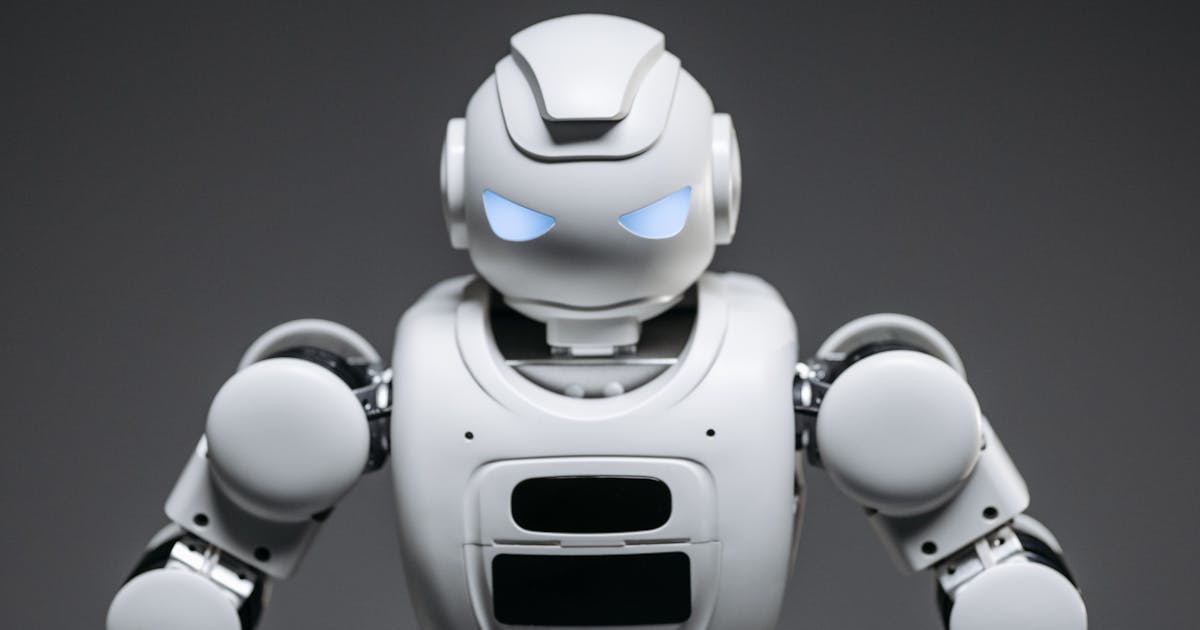
2026 is the year humanoid robots stopped being science fiction demos and started being industrial tools. The competitive landscape has shifted dramatically, with ten companies now operating in active commercial deployment across warehouses, factories, research institutions, and emerging home applications. The pace of technological advancement over the past 18 months has been extraordinary, and market dynamics reflect a fundamental transition from research to production.
This comprehensive ranking evaluates humanoid robots across three core dimensions: technological maturity (hardware sophistication and AI capability), commercial readiness (immediate deployment feasibility), and real-world impact (measurable business value). We deliberately prioritize commercial availability—a robot that exists only in controlled demonstrations is technically interesting but practically irrelevant to organizations making procurement decisions.
Table of Contents
1. The 2026 Humanoid Robot Market Context
The global humanoid robotics market reached $18.2 billion in 2025 and is projected to exceed $52 billion by 2030 according to MarketAndMarkets Research. This explosive growth reflects a fundamental shift: humanoid robots are no longer experimental platforms but production tools with measurable ROI. Manufacturing deployment has accelerated particularly in Asia, where China accounts for approximately 90% of global unit shipments by volume. The United States leads in frontier AI research and capability development, while Europe focuses on regulatory frameworks and specialized applications.
Production scale metrics tell the story: Unitree shipped 5,500 units of the G1 in 2025. AgiBot delivered 5,168 A2 units. Together, these two companies alone represent nearly 11,000 humanoid robots deployed globally—a 340% increase over 2024 volumes. These are not limited-edition research prototypes; these are mass-manufactured systems.
Funding dynamics have shifted decisively toward companies demonstrating commercial traction. Figure AI's $2.6 billion Series B valuation, Tesla's internal Optimus development program, and Boston Dynamics' integration into Hyundai's manufacturing operations all signal investor confidence in near-term commercialization. Venture capital flowing into humanoid robotics exceeded $3.1 billion in 2025, with clear preference for companies with existing customer deployments over pure research plays.
2. Our Ranking Methodology
This ranking applies consistent evaluation criteria across all ten robots. We weight three dimensions equally: technological capability (30%), commercial availability (35%), and demonstrated real-world impact (35%). This methodology deliberately favors robots that are deployable today over robots that may be more advanced but remain in limited access programs.
Scoring Criteria Explained
Technological Capability: We assess hardware sophistication (actuator quality, degrees of freedom, payload capacity, battery life), AI integration (foundation model quality, task generalization, learning speed), and sensory capability (vision systems, tactile feedback, environmental understanding). Figure 03's Helix foundation model and Tesla's FSD-derived locomotion systems represent the current frontier.
Commercial Availability: Can you actually purchase or deploy this robot today? Is it limited to strategic partnerships (like Figure 03), or is it available through standard ordering channels (like Unitree G1)? We heavily reward robots with transparent pricing, established supply chains, and documented customer deployments. Robot-as-a-Service models receive additional credit for reducing capital requirements.
Real-World Impact: Beyond specifications, does this robot solve actual business problems? The BMW Spartanburg production line deployment of Figure 03, the Hyundai Metaplant integration of Boston Dynamics Atlas, and the widespread warehouse adoption of Agility Digit demonstrate quantifiable value. Robots with zero deployments, regardless of capability, receive lower scores in this dimension.
3. The Top 10 Humanoid Robots Ranked
1. Figure 03 (Figure AI, USA) — 9.2/10
Status: Pilot deployments | Price: Not publicly disclosed | Funding: $2.6B+ | Battery: ~8 hours
Figure AI has assembled arguably the strongest AI-robotics team globally, with leadership from Boston Dynamics, Google DeepMind, Tesla, and OpenAI. Their Helix foundation model—trained on both simulation and real-world teleoperation data—demonstrates task generalization capabilities no competitor has publicly matched. The robot learns new manipulation tasks in hours rather than weeks.
The BMW Spartanburg deployment represents the most significant proof point: Figure 03 robots are inserting sheet metal components on active production lines alongside human workers. This is operational deployment, not demonstration—with real quality requirements and measurable productivity metrics. Microsoft, OpenAI, and NVIDIA's equity stakes provide access to computational infrastructure and AI talent that smaller competitors cannot access.
The primary limitation is restricted availability. Figure maintains hand-selected partnerships with major manufacturers rather than open market sales. For most businesses, Figure 03 represents a technology to monitor rather than a platform to deploy in 2026. Nonetheless, in terms of pure capability, nothing on this list demonstrates equivalent sophistication.
2. Boston Dynamics Atlas (Electric) — 8.5/10 (capability) / 6.0/10 (availability)
Status: Internal deployment at Hyundai | Price: Not for sale | Battery: ~1 hour
The electric Atlas, unveiled in April 2024, remains the most physically capable humanoid ever manufactured. Its movements exhibit fluidity unmatched by competitors—360-degree torso rotation, continuous manipulation during locomotion, recovery from perturbations that would disable other humanoids. The Hyundai Metaplant deployment generates measurable industrial value in automotive manufacturing.
The critical limitation for external customers is that Atlas is not available for commercial purchase. Boston Dynamics operates exclusively within the Hyundai ecosystem with no announced external sales timeline. This makes Atlas the most impressive robot you cannot acquire—technically magnificent but commercially irrelevant for independent businesses. See our Boston Dynamics Spot review for a Boston Dynamics platform with actual availability.
3. Tesla Optimus Gen 3 — 8.5/10
Status: Internal deployment + limited partner sales | Price: ~$25,000 target | Battery: 8 hours
Tesla's humanoid robotics approach diverges fundamentally from competitors. While others build the best robot possible then seek customers, Tesla designs robots specifically for its own manufacturing operations—treating external sales as secondary. This creates a unique advantage: Optimus is trained on millions of hours of real factory data with improvements deployed fleet-wide via OTA updates.
The Gen 3 hands (22 DOF, 50 actuators) represent genuine engineering achievement—they handle raw eggs, sort battery cells, and manipulate delicate cables with surprising precision. The 8-hour battery life leads the category by a significant margin. Integration with Grok (xAI) enables conversational human-robot collaboration.
Tesla's history of ambitious timelines that slip moderates enthusiasm. The $25,000 target price and late-2026 partner availability merit healthy skepticism. See our complete Tesla Optimus review for detailed technical analysis.
4. Unitree G1 — 8.2/10
Status: Commercial (5,500+ units sold in 2025) | Price: $16,000–$73,000 | Battery: 2–5 hours
Unitree G1 accomplished something genuinely important: proof that capable humanoid robots can be manufactured and sold at consumer electronics price points. At $16,000 for the base model, the G1 costs less than industrial cobots—and has become the default research platform at MIT, Stanford, CMU, and ETH Zürich.
The G1 achieved best-seller status with 5,500 units sold in 2025. The open SDK, ROS2 compatibility, and vibrant GitHub community (2,000+ stars) have created an accelerating ecosystem. Dex3-1 hands enable meaningful manipulation; reinforcement learning-based locomotion demonstrates impressive stability.
Limitations are substantial: 2-hour battery life constrains industrial use, 2-3 kg payload is insufficient for logistics, and documented UniPwn security vulnerabilities require mitigation in enterprise deployments. For accessibility and community ecosystem, G1 remains unmatched. See our complete G1 review for comprehensive technical assessment.
5. Agility Digit — 8.3/10
Status: Commercial (RaaS model) | Price: ~$250,000 or ~$6,000/month | Battery: 8 hours
Agility Robotics achieved something unique: a genuinely commercial Robot-as-a-Service model that works economically. Digit operates in real warehouses moving totes between AMRs and conveyor systems. The $6,000/month all-inclusive RaaS pricing enables logistics operators to avoid $250,000 capital expenditures.
Digit is purpose-built for logistics—not attempting to be a general-purpose platform. This focus is both strength and limitation. It excels at repetitive pick-and-place in structured warehouse environments with swappable batteries enabling 24/7 operation. It lacks the dexterity and AI sophistication for assembly or inspection tasks.
For logistics-focused businesses, Digit is the most commercially mature humanoid available in 2026. See our complete rental guide for RaaS pricing and recommendations.
6. Unitree H2 — 8.0/10
Status: Commercial launch Q2 2026 | Price: $29,900 | Payload: 15 kg | Battery: 8 hours
Unitree's full-size humanoid (180 cm, 70 kg) bridges the gap between the compact G1 and premium industrial offerings. The H2 targets warehouse and factory use cases similar to Digit but at significantly lower cost. Early demonstrations show improved payload capacity and battery life over G1, though independent testing data remains limited.
At $29,900, the H2 directly challenges Digit's price dominance while targeting the same market. Whether it can match Digit's reliability in 24/7 warehouse operations requires field validation. See our Unitree H1 review for context on Unitree's industrial strategy.
7. AgiBot A2 — 7.8/10
Status: Commercial (primarily China) | Price: ~$27,000 | Units sold (2025): 5,168
AgiBot, backed by SAIC Motor (China's largest automaker), is the second-largest humanoid vendor globally by volume. The A2 prioritizes reliability and repeatability over headline features. It lacks the G1's agility and Figure's AI sophistication but operates consistently in Chinese factory environments with automotive-grade supply chain backing.
International availability remains limited with sparse English documentation. For businesses outside China, AgiBot merits monitoring but deployment today is difficult. Within China, it represents a serious industrial option with manufacturer credibility.
8. 1X NEO — 7.5/10
Status: Limited release | Price: ~$20,000 | Backed by: OpenAI
1X Technologies (Norway) has built the most thoughtfully designed home-oriented humanoid. NEO uses novel actuator technology making it quieter and safer for close human interaction than industrial-grade alternatives. OpenAI backing provides access to frontier language and vision models.
The honest assessment: NEO is not ready for mainstream home use in 2026. Battery life, task reliability, and unstructured home environment complexity remain significant challenges. 1X is asking the right questions about what home robots actually need, making this worth monitoring for 2027–2028 deployment.
9. Fourier GR-2 — 7.2/10
Status: Commercial | Price: ~$55,000 | Focus: Medical and industrial
Fourier Intelligence (Shanghai) brings medical robotics expertise—exoskeletons and rehabilitation devices—giving GR-2 distinctive focus on safe, compliant human-robot interaction. The robot deploys in physical therapy settings and light industrial tasks where gentle, predictable movements matter more than speed.
GR-2 occupies a useful niche between affordable G1 and powerful Digit. At $55,000, it is accessible to hospitals and research institutions. The medical angle provides regulatory pathways general-purpose humanoids lack.
10. NEURA 4NE1 — 7.0/10
Status: Pre-order | Price: €19,999 | Origin: Germany
NEURA Robotics (Metzingen, Germany) offers the best European alternative with automotive-grade engineering. The Porsche-influenced industrial design feels distinctly European. Cognitive AI capabilities exceed the specification sheet, with strong natural language understanding and spatial reasoning.
Production volume remains the challenge—NEURA is scaling but has not reached Unitree or AgiBot output levels. For European businesses seeking supply chain independence from China, NEURA is the credible option, though 2026 availability may be constrained.
4. Technology Comparison Table
| Robot | Height (cm) | Weight (kg) | Payload (kg) | Battery Life | Price (USD) | DoF | AI Model | Status |
|---|---|---|---|---|---|---|---|---|
| Figure 03 | 173 | 60 | 13 | 8h | N/A | 28 | Helix | Pilot |
| Boston Dynamics Atlas | 170 | 80 | 18 | 1h | N/A | 28 | Proprietary | Internal only |
| Tesla Optimus Gen 3 | 173 | 57 | 8 | 8h | $25,000 | 40 | FSD-derived | Limited sales |
| Unitree G1 | 170 | 35 | 3 | 2–5h | $16,000 | 40 | UnifoLM-VLA | Commercial |
| Agility Digit | 160 | 45 | 10 | 8h | $250,000 | 20 | Proprietary | RaaS |
| Unitree H2 | 180 | 70 | 15 | 8h | $29,900 | 40 | UnifoLM-VLA | Q2 2026 |
| AgiBot A2 | 168 | 52 | 5 | 3h | $27,000 | 38 | Proprietary | Commercial |
| 1X NEO | 168 | 48 | 4 | 2h | $20,000 | 34 | OpenAI integration | Limited |
| Fourier GR-2 | 165 | 45 | 3 | 4h | $55,000 | 33 | Proprietary | Commercial |
| NEURA 4NE1 | 164 | 48 | 5 | 6h | €19,999 | 35 | Proprietary | Pre-order |
5. Key Market Trends Shaping 2026
Price Compression Accelerating
In 2023, the cheapest capable humanoid robot cost approximately $250,000 (Digit). In 2026, capable units are available for $16,000. This is not gradual decline—it is structural transformation driven by Chinese manufacturing scale and component commoditization. Expect sub-$10,000 humanoids by 2028. This deflation mirrors EV industry dynamics from a decade ago, where competitive volume manufacturing compressed prices before quality converged.
China Dominates Production Volume
Three of the top 10 robots are Chinese-manufactured, with Chinese makers accounting for roughly 90% of global humanoid robot shipments by volume. The US leads in frontier AI research (Figure, Tesla, Boston Dynamics), but China leads manufacturing and commercial deployment. This mirrors the EV industry: US firms pioneered EV technology; Chinese manufacturers captured 60%+ market share through volume production.
Robot-as-a-Service Becomes Default Model
Agility pioneered RaaS for humanoids; the model is spreading across the market. For most businesses, the question is no longer buy versus rent—it is which RaaS provider offers the best economics for the specific use case. Capital expenditure is replaced with operational expense, fundamentally changing purchasing economics. See our complete rental guide for pricing analysis across RaaS providers.
Vision-Language-Action (VLA) Models as AI Differentiator
Every serious humanoid manufacturer is now integrating foundation models combining visual perception, language understanding, and physical action planning. Figure's Helix, Tesla's FSD-derived system, and Unitree's UnifoLM-VLA represent three approaches to watch. Within 2–3 years, VLA model quality will matter more than hardware specifications. The robot's ability to understand instructions, perceive context, and plan actions intelligently is becoming the genuine competitive advantage.
6. How to Choose a Humanoid Robot for Your Business
Use Case 1: Warehouse Automation
For repetitive pick-and-place in structured warehouse environments, Agility Digit (RaaS model) or Unitree H2 are optimal choices. Digit offers proven reliability at $6,000/month; H2 offers lower capital cost at $29,900. Both support 24/7 operation with swappable batteries and have demonstrated warehouse deployments.
Use Case 2: Manufacturing Assembly
For precision manufacturing tasks with learning requirements, Figure 03 or Tesla Optimus Gen 3 are the leaders. Figure demonstrates production-line capability (BMW Spartanburg); Optimus delivers 8-hour battery life and dexterous hands. Both operate at or above the current technology frontier. Budget $2M+ for Figure partnerships; $25,000 for future Optimus availability.
Use Case 3: Research and Development
Unitree G1 is the clear choice for research—$16,000 entry cost, open SDK, thriving academic ecosystem, and 2,000+ GitHub projects. If you need more industrial capability, Digit or Fourier GR-2 provide structured environments at higher capability and cost. Most research institutions choose G1 for accessibility; specialized medical research may favor GR-2.
Use Case 4: Home and Domestic Tasks
1X NEO is the most purpose-designed home robot, though 2026 deployment is premature. Unitree G1 with appropriate programming can handle some domestic tasks but was not designed for home environments. Home robotics remains pre-commercial; expect credible options by 2027–2028.
Use Case 5: Medical and Therapeutic Applications
Fourier GR-2 is purpose-built for medical environments with compliance and safety as core design principles. The $55,000 price is accessible to hospitals and therapy centers. Regulatory pathways for medical devices give GR-2 advantages general-purpose robots lack.
7. Frequently Asked Questions
Q1: Which humanoid robot will have the highest market share by 2028?
Based on current trajectory, Unitree will likely lead in unit volume due to aggressive pricing and open ecosystem. Figure will lead in capability and premium deployments. Tesla will lead in integration (Optimus within Tesla factories). The market will stratify: Unitree dominates volume, Figure leads premium, Tesla leads integrated deployment. No single robot will capture majority market share.
Q2: Can I deploy a humanoid robot in my warehouse today?
Yes. Agility Digit is operational in warehouses now via RaaS ($6,000/month). Unitree H2 launches Q2 2026 at $29,900. Both are deployable immediately without waiting for technology maturation. The trade-off is capability versus cost—Digit is proven; H2 is cheaper but less tested.
Q3: How do I evaluate ROI for a humanoid robot deployment?
Calculate three metrics: (1) labor hours replaced per day, (2) cost per hour of displaced labor, and (3) robot deployment cost (capital or RaaS). For Digit RaaS at $6,000/month operating 24/7, the effective cost is ~$8.33/hour. Compare this to your displaced labor cost. Breakeven typically occurs within 12–18 months for warehouse deployments.
Q4: What are the main limitations of current humanoid robots?
Battery life remains constrained (most are 2–8 hours). Payload capacity is modest (typically 3–15 kg). Cost remains high for smaller operations. Specialized skills beyond programmed tasks require AI advancement. Weather resistance, outdoor capability, and unstructured environment operation remain challenging. These limitations are narrowing rapidly—expect meaningful improvement by 2027.
Q5: Is Figure 03 available for commercial purchase?
Not through open market channels. Figure maintains strategic partnerships with major manufacturers (BMW, etc.). If you are a major industrial manufacturer, approaching Figure directly may open opportunities. For small to mid-sized businesses, Figure is not currently accessible. Monitor for changes in their commercialization strategy.
Q6: How important is the Vision-Language-Action (VLA) model?
Critical importance. The VLA model determines how well the robot understands instructions, perceives its environment, and plans actions. Figure's Helix and Tesla's FSD-derived systems represent the frontier. VLA model quality will become the primary competitive differentiator within 2–3 years. Hardware commoditizes; AI capabilities differentiate.
Q7: Should I invest in humanoid robotics for my business in 2026?
If your business involves repetitive warehouse tasks, high-volume manufacturing, or specialized medical applications, humanoid deployment makes economic sense today. For other use cases, monitoring progress is prudent. The technology is moving rapidly; decisions made in mid-2026 will feel very different by late 2027. Start with pilots if possible before major capital commitments.
8. Sources & References
- MarketAndMarkets Research (2025). Humanoid Robot Market by Type and Application. Retrieved from https://www.marketsandmarkets.com/Market-Reports/humanoid-robots-market.html
- Robozaps (2026). Global Humanoid Robot Market Overview. Retrieved from https://www.robozaps.com/market-reports
- Precedence Research (2026). Humanoid Robotics Market Size, Share & Trends. Retrieved from https://www.precedenceresearch.com/humanoid-robotics-market
- Humanoids Daily (2026). 2026 Humanoid Robot Deployment Report. Retrieved from https://humanoidsdaily.com/reports
- Unitree Official Documentation (2026). Unitree G1 and H2 Technical Specifications. Retrieved from https://www.unitree.com/products
- Boston Dynamics (2024). Atlas Electric Technical Overview. Retrieved from https://www.bostondynamics.com/atlas
- Agility Robotics (2026). Digit RaaS Platform and Pricing. Retrieved from https://www.agilityrobotics.com/digit
- Standard Bots (2026). Humanoid Robot Comparison Analysis. Retrieved from https://www.standardbots.com/post/humanoid-robots
- BotInfo (2026). Humanoid Robot Market Tracker. Retrieved from https://botinfo.ai/humanoid-robots
- Figure AI (2026). Figure 03 Product and Partnership Information. Retrieved from https://www.figure.ai